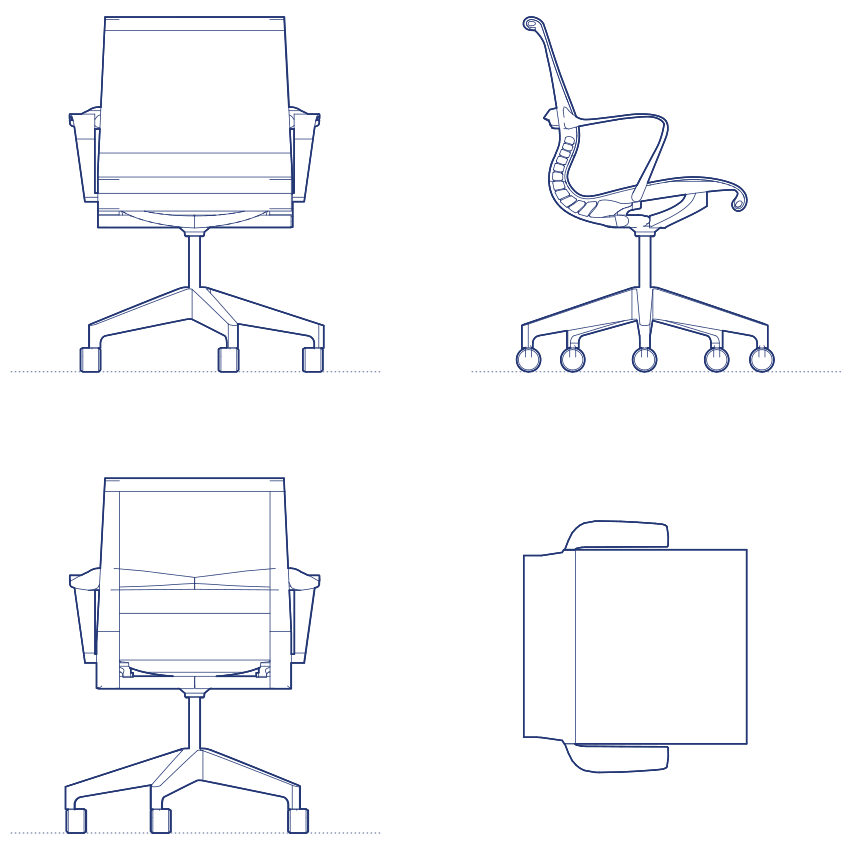
Setu Side Chair by Herman Miller was designed by Studio 7.5, taking its name from the Sanskrit word for "bridge" — a reference to the chair's innovative structural approach, in which a series of flexible polymer bands bridge between the frame and the seating surface to provide support that moves and flexes with the sitter without any manual adjustment mechanisms whatsoever. Setu has no levers, no knobs, no tension dials — its comfort comes entirely from the intelligent flex engineered into the frame and seat structure itself, responding automatically to whoever sits in it.
The Setu Side Chair's complete absence of adjustment mechanisms makes it particularly effective in guest seating, collaborative meeting spaces and any context where a chair needs to work comfortably and immediately for any user without instruction or setup — precisely the requirement of visitor and side-chair applications, as distinct from a primary task chair used by a single dedicated occupant for extended periods. Its lightweight, visually simple form also makes it easy to move and reconfigure around a meeting table or collaborative work setting. Its stackable construction also allows multiple Setu chairs to be stored compactly when a meeting room or collaborative space needs to be quickly reconfigured for a different use.
Architects and interior designers specifying the Setu Side Chair for meeting room, guest seating and collaborative office environments will find the DWG drawing and CAD block useful for furniture layout and clearance planning. The 3D model and Revit family support BIM-accurate spatial documentation. A practical specification for any project requiring intuitive, adjustment-free guest and side seating.
Available as a 2D DWG drawing, 3D model and Revit file.